
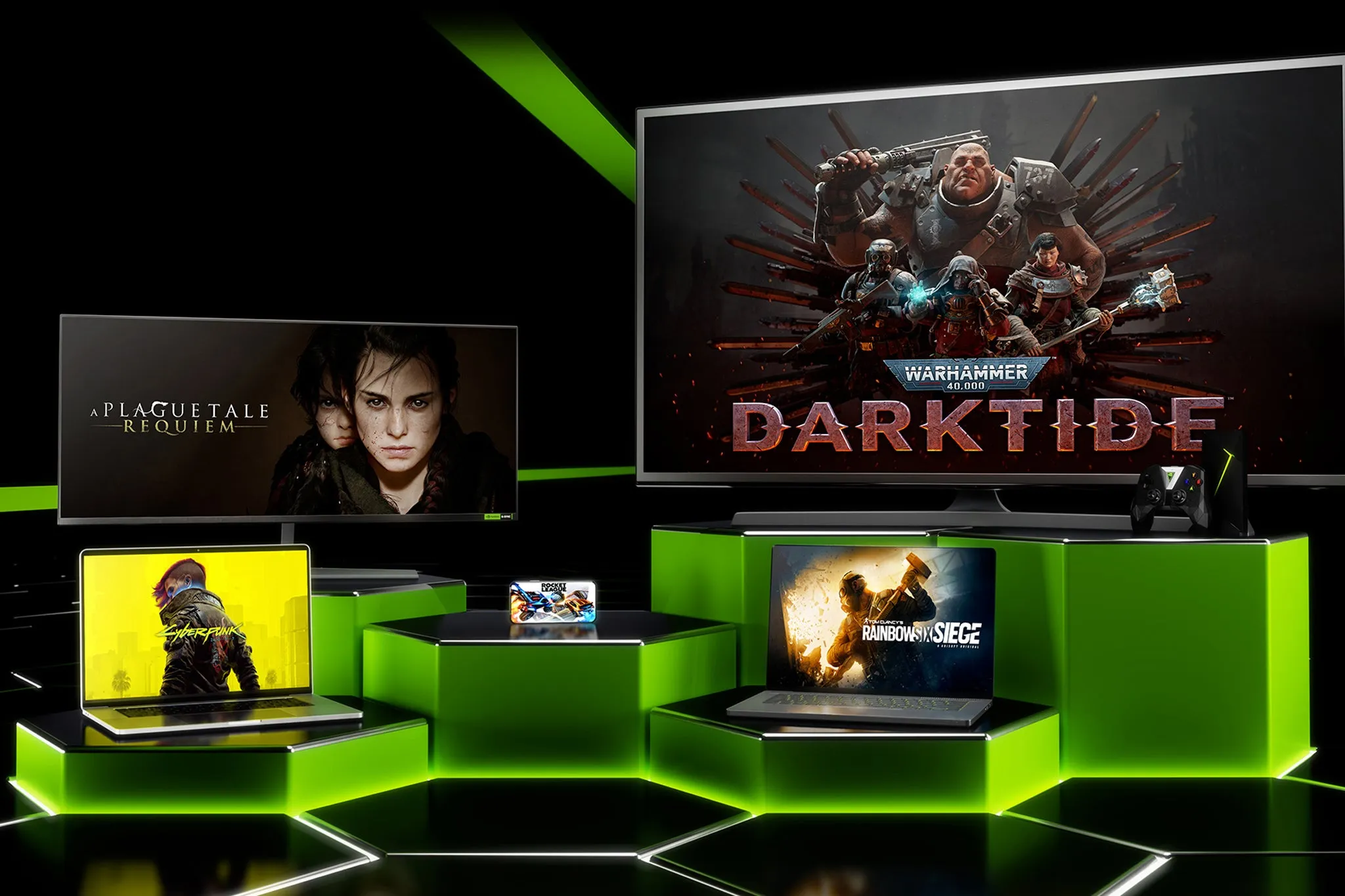
Cloud gaming services are redefining how people experience video games, turning any compatible screen into a powerful gaming machine without expensive hardware. Imagine playing a AAA title on a budget laptop, a mid-range smartphone, or even a smart TV — all without installing a single gigabyte locally. That’s not a futuristic dream anymore. It’s already happening.
Over the last few years, internet speeds have improved, data centers have expanded, and streaming technology has matured. These shifts have quietly built the foundation for a massive transformation in the gaming industry. Instead of buying a console every few years or constantly upgrading a gaming PC, players can now stream high-end games directly from powerful remote servers.
For gamers in regions like India, where hardware costs can be high relative to income, this shift feels especially important. It opens doors. It levels the playing field. And it changes what “gaming accessibility” truly means.
Table of Contents
ToggleWhat Are Cloud Gaming Services?
At its core, Cloud gaming services allow users to stream video games from remote servers, much like streaming a movie on a video platform. The game runs in a data center equipped with high-performance GPUs. Your device simply displays the video feed and sends back your controller inputs in real time.
Instead of downloading and installing games, players click “Play” and start instantly. There are no patches, no updates, and no long loading bars eating into your weekend gaming session.
Several companies have already entered this space.
Platforms like NVIDIA with GeForce Now, Xbox Cloud Gaming, PlayStation Now, and Amazon Luna are pushing boundaries by combining powerful infrastructure with subscription-based gaming models.
Each platform works slightly differently. Some require you to own the game on another store. Others provide full libraries through monthly subscriptions. But the core principle remains the same: play anywhere, instantly.
Why Cloud Gaming Services Are Gaining Momentum
The appeal of Cloud gaming services isn’t just convenience. It’s economics, flexibility, and scalability combined.
A traditional gaming setup can cost hundreds or even thousands of dollars. A high-end graphics card alone can equal several months of salary in developing regions. But with cloud streaming, the heavy lifting happens in remote data centers. Your local device becomes just a screen and controller.
Another reason for the rapid growth is cross-device compatibility. You can start a game on your laptop, continue on your smartphone during a commute, and finish it on your TV at home. The continuity feels seamless.
Then there’s the instant access factor. No downloads. No storage management. No worrying about SSD space. For players who want frictionless entertainment, this is incredibly appealing.
How Cloud Gaming Services Actually Work
To understand the technology behind Cloud gaming services, imagine a high-powered gaming PC located in a secure data center. When you launch a game, that remote PC runs it in real time.
Your device receives a compressed video stream of the gameplay. When you press a button or move a joystick, that input travels back to the server, which updates the game instantly and sends the next frame back to you.
This entire process happens in milliseconds. The key performance metric here is latency. The lower the latency, the smoother the experience.
Modern advancements in 5G, fiber broadband, and edge computing are significantly reducing delay. That’s why cloud gaming feels far smoother today than it did five years ago.
The Role of 5G and Faster Internet
High-speed internet is the backbone of Cloud gaming services. Without stable bandwidth, the experience can feel laggy or pixelated.
In countries where 5G rollouts are accelerating, the growth potential for game streaming is massive. Faster connections mean higher resolutions, better frame rates, and reduced input delay.
Edge computing is another game-changer. By placing servers closer to users geographically, providers reduce the physical distance data must travel. This dramatically improves responsiveness.
For competitive gamers, milliseconds matter. As infrastructure improves, even esports-level performance via streaming becomes realistic.
Advantages Over Traditional Gaming
The biggest strength of Cloud gaming services lies in accessibility.
You no longer need to worry about hardware upgrades every few years. There’s no fear of missing out on a new release because your system doesn’t meet minimum requirements.
Storage limitations disappear. Game patches install instantly in the cloud. And security risks from unofficial downloads are minimized because everything runs on managed infrastructure.
Another underrated benefit is sustainability. Centralized data centers can be optimized for energy efficiency more effectively than millions of separate gaming rigs running at home.
For casual gamers, parents, students, and even professionals who travel frequently, this flexibility changes everything.
Challenges That Still Exist
Despite rapid innovation, Cloud gaming services are not without limitations.
Internet stability remains the biggest hurdle. In rural or low-connectivity areas, performance can fluctuate. Data consumption is also significant. Streaming in high resolution can consume several gigabytes per hour.
Ownership models are another debated topic. When you stream a game, you don’t physically own it. Access depends on platform agreements and subscriptions. That can feel uncertain compared to owning a physical disc or digital copy.
Additionally, competitive players sometimes notice slight input delays compared to local hardware. While improving, the technology isn’t flawless yet.
Real-World Use Case: A Student Gamer’s Experience
Consider a college student living in a shared apartment. Buying a gaming console might not fit the budget. Building a gaming PC might be unrealistic.
With Cloud gaming services, that student only needs a decent internet connection and an affordable controller. Suddenly, high-end games become accessible.
Instead of investing in hardware, the student pays a small monthly fee. They can pause their subscription during exams and resume during holidays. The flexibility is powerful.
This model mirrors how streaming changed music and movies. People shifted from owning CDs and DVDs to accessing libraries on demand.
Cloud Gaming Services and the Future of Esports
There was once skepticism about whether esports could thrive on streaming infrastructure. Today, that conversation is evolving.
As latency drops and reliability increases, competitive events can leverage Cloud gaming services for training, scrimmages, and even tournaments. Teams can practice from different regions without expensive travel.
Game publishers also benefit. They can deploy updates server-side instantly, ensuring all players compete on identical versions.
This centralization reduces cheating risks because the game environment is tightly controlled within secure servers.
Business Impact and Industry Transformation
Game development studios are rethinking distribution because of Cloud gaming services.
Instead of designing games solely for specific hardware consoles, developers can optimize for cloud scalability. Performance limitations shrink because servers can be upgraded centrally.
Subscription-based access models are also transforming revenue streams. Rather than relying purely on one-time purchases, companies can build recurring income.
For investors and tech entrepreneurs, this sector represents long-term growth potential. The combination of gaming, AI optimization, and cloud infrastructure creates a powerful ecosystem.
Comparing Major Platforms
GeForce Now focuses on letting players stream games they already own from existing PC libraries.
Xbox Cloud Gaming integrates tightly with subscription libraries, offering hundreds of titles under one plan.
PlayStation Now blends classic and modern titles, targeting console fans.
Amazon Luna experiments with channel-style subscriptions, letting users choose themed content bundles.
The diversity in models shows that the market is still evolving. No single strategy has completely dominated yet.
Security, Privacy, and Data Protection
Trust is essential for adoption.
Because Cloud gaming services rely on centralized servers, companies must maintain strict data security standards. Account credentials, payment information, and gameplay data must be protected.
Reputable providers invest heavily in encryption and compliance protocols. This strengthens user confidence and supports long-term growth.
For parents concerned about online gaming safety, centralized moderation systems also provide improved oversight compared to decentralized PC gaming environments.
Environmental Considerations
Gaming hardware consumes electricity at scale. Millions of consoles and PCs running daily create significant energy demand.
Optimized data centers powering Cloud gaming services can potentially reduce overall environmental impact by improving efficiency.
Renewable energy integration into large cloud facilities further strengthens sustainability efforts. While not perfect, centralized optimization offers more measurable impact than scattered consumer hardware.
The Psychological Shift: Ownership vs Access
One of the most interesting aspects of Cloud gaming services is the mindset shift they require.
For decades, gamers equated ownership with value. Physical cartridges, discs, or digital downloads felt permanent.
Now, access-based entertainment is becoming normalized. Younger audiences are comfortable subscribing rather than owning. This mirrors trends in music and video streaming.
The shift may feel uncomfortable for some long-time players, but it also unlocks broader accessibility and experimentation with new titles.
What the Next Five Years Could Look Like
As infrastructure expands and costs decline, Cloud gaming services are likely to integrate directly into smart TVs, browsers, and even car entertainment systems.
AI-driven compression will improve visual quality while reducing bandwidth usage. Personalized streaming optimization could automatically adjust resolution based on real-time connection strength.
Developers may create cloud-exclusive games that leverage massive server-side computing power impossible on local machines.
The transformation won’t happen overnight, but momentum is clearly building.
Why Cloud Gaming Services Matter Today
Cloud gaming services are more than a convenience trend. They represent a structural change in how games are distributed, monetized, and experienced.
For gamers, the biggest benefit is freedom. Freedom from hardware constraints. Freedom from storage limits. Freedom from long installation times.
For developers, it means broader reach and simplified updates.
For the industry as a whole, it signals the convergence of cloud computing, AI, and entertainment into a unified digital ecosystem.
The technology is still evolving, but its direction is clear. Gaming is moving from boxes under televisions to powerful servers in the cloud, accessible with a simple tap or click.
Read also:-
snapchat planet bsf list
snap plus planeten
bsf snap planets
snapchat planeter
gulzacyiseasis