
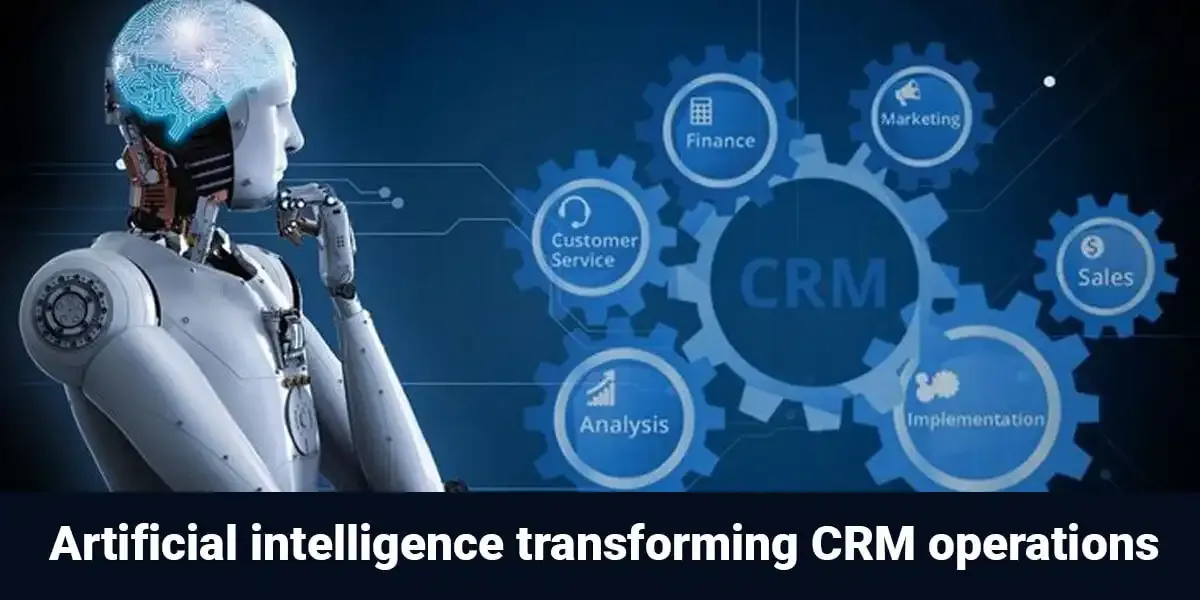
AI-Driven CRM Systems are no longer a luxury reserved for the tech giants of Silicon Valley; they have become the beating heart of modern customer relationship management for businesses of all sizes. Imagine a world where your sales team never has to guess which lead is most likely to close or spend hours manually logging data into a clunky spreadsheet. We are witnessing a massive shift from reactive database management to proactive, intelligent assistants that can actually think alongside your sales representatives. This evolution is fundamentally changing the way we perceive customer interaction, moving away from simple transactional records toward deep, meaningful digital relationships.
If you have ever felt overwhelmed by the sheer volume of customer data flowing into your business, you are certainly not alone. For years, the traditional CRM was nothing more than a glorified digital Rolodex, a place where information went to be stored but rarely to be analyzed. Sales managers would spend their weekends squinting at charts, trying to find patterns in historical data that might give them an edge in the coming quarter. The introduction of artificial intelligence into this space has effectively turned the lights on in a dark room, illuminating the hidden connections between customer behavior and purchasing intent.
Consider the journey of a typical small business owner named Alex, who runs a growing e-commerce brand. Alex used to struggle with high customer churn, unable to figure out why loyal buyers were suddenly disappearing. When he finally made the switch to AI-Driven CRM Systems, the software didn’t just list his customers; it flagged specific individuals whose engagement scores were dropping. It suggested a personalized discount code for a customer who hadn’t visited the site in three weeks, sent at the exact time of day that customer was most likely to check their email. This is the power of predictive intelligence in action.
The beauty of these systems lies in their ability to learn and adapt over time, becoming more accurate with every interaction they process. Unlike a static piece of software, an AI-enhanced platform gets to know your business, your market, and your customers on a granular level. It begins to understand the nuances of your sales cycle, recognizing that a lead from a trade show might need a different touch than a lead from a social media ad. By removing the guesswork from the equation, businesses can focus their energy on what really matters: building human connections and solving problems for their clients.
The Technical Mechanics and Evolution of AI-Driven CRM Systems
To truly appreciate the impact of these platforms, we have to look at the underlying technology that makes them so effective. At the core of these systems are machine learning algorithms and Natural Language Processing (NLP). Machine learning allows the system to analyze vast datasets to identify trends that would be impossible for a human to spot. For instance, it can correlate a specific weather pattern in a region with a spike in demand for a particular product, allowing a company to adjust its inventory and marketing spend before the trend even hits its peak.
Natural Language Processing is perhaps the most impressive feature for the average user, as it allows the CRM to “read” and “understand” the sentiment behind customer communications. When a client sends an angry email, the system can immediately flag it as a high-priority issue and route it to a senior support representative. It can even suggest the best tone for the response based on the customer’s history. This level of sophisticated sentiment analysis ensures that no customer feels ignored and that every interaction is handled with the appropriate level of urgency and care.
The shift from traditional CRM to these intelligent platforms has happened in three distinct waves. The first wave was the digitization of records, moving from paper to local servers. The second wave was the move to the cloud, allowing teams to access data from anywhere in the world. Now, we are in the third wave: the era of intelligence. This current phase is defined by the integration of data from every possible touchpoint, including social media, website visits, phone calls, and even physical store visits, into a single, unified view of the customer.
Furthermore, the integration of generative AI has added a creative layer to these technical systems. Sales teams can now use their CRM to draft personalized outreach emails that don’t sound like they were written by a machine. The AI can pull specific details from a customer’s LinkedIn profile or their past purchase history to create a message that feels authentic and relevant. This reduces the “friction” of the sales process, making it easier for representatives to start conversations and build rapport without spending hours on research for every individual prospect.
Key Benefits of Implementing AI-Driven CRM Systems for Modern Sales Teams
One of the most immediate benefits of adopting these systems is the radical improvement in lead scoring and prioritization. In a traditional setup, every lead is often treated with the same level of importance, leading to wasted time on “dead-end” prospects. An intelligent CRM uses historical win-loss data to assign a probability score to every new lead. This allows your sales team to start their day by focusing on the 10% of leads that are most likely to convert, rather than sifting through a list of hundreds of lukewarm contacts.
Beyond lead scoring, these systems offer a level of sales forecasting accuracy that was previously unattainable. Traditional forecasting is often based on “gut feeling” and optimistic projections from sales reps who want to hit their targets. AI, however, looks at the cold, hard data. It examines the velocity of deals through the pipeline, the average time spent in each stage, and external market factors to provide a realistic outlook of future revenue. This allows business leaders to make informed decisions about hiring, expansion, and capital investment with a much higher degree of confidence.
Hyper-personalization is another area where these platforms truly shine, especially in the world of marketing automation. Customers today are bombarded with generic marketing messages, most of which are promptly deleted. An AI-driven system allows you to segment your audience with surgical precision. It can trigger automated workflows based on specific actions, such as a customer lingering on a pricing page for more than two minutes. By delivering the right message to the right person at exactly the right time, businesses can significantly increase their conversion rates and customer lifetime value.
The reduction of “administrative drag” is a benefit that is often overlooked but deeply appreciated by the people on the front lines. Research shows that sales reps often spend less than 35% of their time actually selling, with the rest taken up by manual data entry and administrative tasks. AI-Driven CRM Systems can automatically log calls, sync emails, and update deal stages based on the content of those interactions. This frees up your most talented people to do what they do best: talking to people and closing deals. When technology handles the drudgery, the human spirit is allowed to flourish.
The Role of Experience and Expertise in AI Adoption
While the technology is incredibly powerful, the “Experience” and “Expertise” components of the EEAT framework are vital for a successful implementation. You cannot simply flip a switch and expect an AI to solve all your problems overnight. A successful rollout requires a deep understanding of your business processes and a commitment to data hygiene. If you feed the system “garbage” data, it will inevitably produce “garbage” insights. This is where the expertise of seasoned sales leaders and data analysts becomes indispensable.
Experience has shown that the most successful companies are those that view AI as a partner to their human staff, not a replacement. There is a learning curve involved in trusting the machine’s recommendations. For example, a veteran salesperson might be skeptical when the CRM tells them to prioritize a small startup over a well-known enterprise. However, the AI might have spotted that the startup just received a massive round of funding and is actively hiring, making them a much better prospect. Bridging this gap between human intuition and machine intelligence is a skill that requires time and patience.
Trustworthiness is also a major factor when dealing with customer data. With the rise of regulations like GDPR and CCPA, businesses must be extremely careful about how they use AI to process personal information. A high-quality AI-driven platform should offer transparent data practices and robust security features. Customers need to know that their data is being used to provide them with a better experience, not to exploit them. Building this trust is essential for long-term brand loyalty in a world where data privacy is a top concern for consumers.
Moreover, the human touch remains the ultimate “expertise” in sales. AI can tell you who to call and what to say, but it cannot replace the empathy and emotional intelligence required to navigate a complex negotiation. The best results come from a “centaur” approach, where the human uses the AI to augment their own abilities. The AI handles the data processing, the pattern recognition, and the automation, while the human focuses on the high-level strategy and the nuances of the relationship. This synergy is what defines the most successful modern sales organizations.
Future Trends in AI-innovative CRM Systems and Beyond
Looking toward the horizon, we can expect to see these platforms become even more integrated into our daily workflows through the use of voice interfaces and “ambient” intelligence. Instead of typing into a dashboard, a sales rep might simply talk to their CRM while driving between appointments. “Hey CRM, give me a summary of my last meeting with the CEO of Acme Corp and suggest a follow-up action.” The system will use voice-to-text and NLP to provide a concise briefing, allowing the rep to stay focused and prepared without ever touching a screen.
We are also seeing a move toward “autonomous” CRM actions, where the system can handle entire low-level sales cycles without human intervention. For simple, transactional products, the AI can engage with a lead, answer their questions, provide a quote, and even process the payment. This allows the human sales team to move up the value chain, focusing exclusively on complex, high-ticket deals that require a deeper level of consultation and relationship building. This shift will lead to a more efficient use of human talent across the board.
The integration of Augmented Reality (AR) with CRM data is another exciting development. Imagine a field service technician wearing AR glasses that can overlay a customer’s entire service history directly onto the machine they are repairing. Or a retail associate who can see a customer’s preferences and past purchases as they walk through the door. By bringing digital intelligence into the physical world, AI-Driven CRM Systems will create seamless experiences that feel like magic to the customer. This level of service is what will separate the leaders from the laggards in the coming decade.
Finally, we must consider the democratizing effect of this technology. As the cost of AI decreases and the ease of use increases, even the smallest “mom and pop” shops will have access to the same level of customer insight as a Fortune 500 company. This levels the playing field, allowing businesses to compete on the quality of their service and the strength of their relationships rather than the size of their IT budget. The future of business is one where intelligence is accessible to everyone, and the focus is firmly placed back on the human beings at the center of every transaction.
Navigating the Implementation Journey and Ensuring Success
Successfully transitioning to an AI-enhanced CRM requires a clear roadmap and a focus on incremental gains. Many companies make the mistake of trying to do everything at once, which leads to confusion and resistance from the staff. Instead, it is often better to start with one specific problem, such as lead scoring or email automation, and master that before moving on to more complex features. This allows the team to see the immediate benefits of the technology, building the momentum and buy-in needed for a full-scale transformation.
Training and “upskilling” are also critical components of the journey. Your team needs to understand how the AI works and how to interpret its outputs. This doesn’t mean they need to become data scientists, but they do need to be “AI literate.” Providing regular workshops and success stories can help demystify the technology and encourage people to experiment with new ways of working. When employees feel empowered by the tools they are using, they are much more likely to embrace the change and contribute to the system’s overall success.
Data governance should be a top priority from day one. You need clear policies on who can access data, how it is collected, and how it is kept up to date. This ensures the integrity of the AI’s insights and protects the business from legal and reputational risks. Regularly auditing your data and cleaning out old or inaccurate records will keep the system running at peak performance. It is a continuous process of refinement, much like tending a garden, but the harvest of increased sales and happier customers is well worth the effort.
Ultimately, the goal of AI-Driven CRM Systems is to make businesses more human, not less. By taking over the repetitive, data-heavy tasks that drain our energy, these platforms allow us to return to the heart of commerce: helping people. Whether you are a small business owner looking to grow your brand or a sales leader at a global corporation, the path forward is clear. Embracing the power of intelligent technology is the key to unlocking the full potential of your team and creating a future where every customer interaction is meaningful, personalized, and successful.