
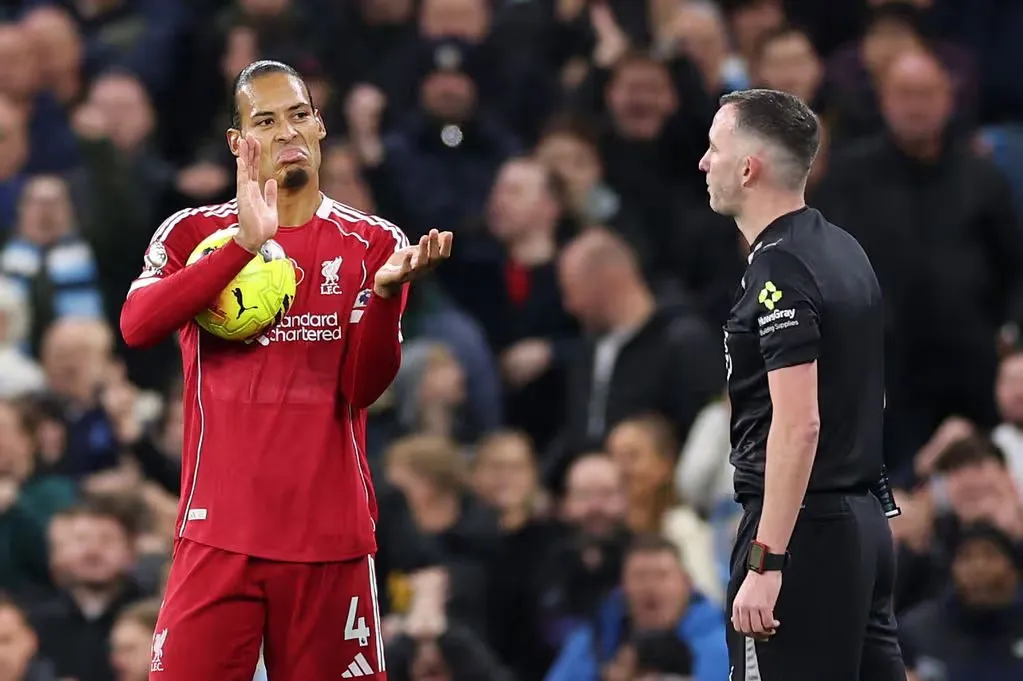
VAR Controversy Decision moments have become as synonymous with matchdays as the sound of the referee’s whistle or the roar of the crowd. We have all been there, sitting on the edge of our seats after a goal is scored, only to see the referee press his finger to his ear and wait for the silent signal from a room miles away. The tension in those minutes is palpable, turning a moment of pure joy into a period of anxious uncertainty. It is a shift in the game’s fabric that few of us truly expected when the technology was first introduced to “fix” the clear and obvious errors of the past.
The original promise of Video Assistant Referees was simple: to ensure that the beautiful game was fair. We were told that the “clear and obvious” threshold would protect the flow of the match while correcting the kind of blunders that haunt teams for decades. However, as the seasons have progressed, the reality has been far more complex. Instead of ending the debates, the technology has often intensified them, moving the argument from the pitch to a digital screen.
Every weekend, social media platforms are flooded with screenshots of red lines and zoomed-in frames of a player’s shoulder or kneecap. The precision that technology offers is a double-edged sword. While it can tell us if a ball crossed a line or if a player was an inch offside, it struggles to capture the “spirit” of the game. This clash between mathematical accuracy and the subjective nature of football is at the very heart of why these decisions remain so polarizing.
Think back to some of the most famous incidents in recent memory where a VAR Controversy Decision changed the course of a season. Whether it was a disallowed goal for a marginal offside that nobody in the stadium saw, or a handball given for a ball that deflected off a player’s body at point-blank range, the consistency remains elusive. Fans are often left wondering why a foul in one match is ignored, while a similar incident in another results in a game-changing penalty after a three-minute review.
The human element remains the most significant factor in this digital era. Behind the monitors are humans who must interpret the rules under immense pressure. They are watching slow-motion replays that can often make a simple collision look like a violent assault. When you slow down footage, physics starts to look different, and the intent behind a movement becomes harder to judge. This is where the friction begins, as what looks like a foul on a 0.25x speed replay might look like a perfectly normal challenge in real-time.
The Psychological Weight of a VAR Controversy Decision
For the players on the pitch, the psychological impact of a delayed decision is immense. Imagine the adrenaline surge of scoring a winning goal in the final minutes of a derby. You run to the fans, slide on your knees, and celebrate with your teammates, only to be told two minutes later that your teammate was offside by the width of a shoelace during the buildup. That emotional crash is something that players are still learning to navigate. It has changed the way they celebrate and, in some cases, the way they play the game.
Managers also face a new kind of stress. In the pre-VAR era, you could blame a referee for a mistake made in a split second. Now, managers are questioning why an official with access to multiple angles and slow-motion replays still “gets it wrong” in their eyes. This has led to increasingly heated post-match press conferences where the focus is rarely on the tactics or the performance, but rather on the technicality of a specific review.
The fans in the stadium are perhaps the ones who feel the most disconnected. While viewers at home often see the replays and the lines being drawn, those in the stands are frequently left in the dark. They see the referee standing still, a small graphic on the big screen, and then a final result. This lack of transparency has led to a feeling of alienation among the most loyal supporters, who feel the spontaneous joy of the match is being traded for a sterilized, broadcast-focused experience.
One could argue that the VAR Controversy Decision has actually increased the scrutiny on referees rather than alleviating it. Because we now expect perfection, any deviation from what we perceive as “the right call” feels like a betrayal of the technology’s purpose. We have replaced the “referee’s mistake” with the “system’s failure,” and the latter feels much harder for the footballing world to swallow.
The handball rule has been one of the most significant casualties of this technological shift. Before video reviews, handballs were mostly judged on intent and natural movement. Now, the rulebook has been poked and prodded to create a set of criteria that a camera can measure. This has led to “unnatural silhouette” debates that leave even former professional players scratching their heads. When the rules are changed to fit the technology, the game starts to lose its intuitive nature.
Navigating the Future of the VAR Controversy Decision Process
To move forward, the footballing authorities are looking at ways to improve the transparency of the process. We are starting to see experiments where the referee’s communication with the VAR booth is broadcast to the fans in the stadium or on television. This move toward openness is designed to show the “workings” behind a call, helping people understand that even if they disagree with the outcome, there was a logical process followed to reach it.
There is also the ongoing discussion about the “clear and obvious” threshold. Many argue that the VAR should only intervene in the most egregious cases, leaving the marginal calls to the on-field official. If you have to look at a replay twenty times to decide if it was a foul, then by definition, it probably wasn’t “clear and obvious.” Re-establishing this boundary could help return some of the authority to the referee on the pitch and speed up the game.
Semi-automated technology is another leap forward that aims to reduce the time taken for offside calls. By using specialized cameras and AI to track body parts, the system can generate a decision in seconds rather than minutes. While this solves the “time” problem, it doesn’t solve the “marginality” problem. A player will still be offside by a millimeter, but at least we won’t have to wait five minutes to find out.
We also have to consider the “VAR Light” versions being developed for leagues with smaller budgets. This shows that the technology is here to stay, regardless of the level of play. The goal is to make it accessible and efficient so that the benefits of error correction can be felt across the global football pyramid. However, the core challenge remains the same: how do you balance the desire for justice with the need for entertainment?
The education of fans and media is another vital piece of the puzzle. Understanding that the VAR is not a computer program making decisions, but a tool used by a human, is crucial. Much like a pilot uses radar to navigate, the official uses video to navigate the match. Mistakes will still happen because human interpretation is part of the sport’s DNA. Accepting this might be the only way to lower the temperature of the current debates.
Storytelling in football used to be about the great goals and the legendary saves. Now, a huge part of the narrative is built around a VAR Controversy Decision that happened in the 42nd minute. This shift in how we consume and talk about the sport is profound. We spend more time analyzing frames of video than we do analyzing the skill of a playmaker. As fans, we have to ask ourselves if this is the direction we want the conversation to go in.
Despite the frustrations, there are undeniable benefits. We no longer see goals scored from three yards offside that go unnoticed. We no longer see “ghost goals” where the ball clearly crossed the line but wasn’t given. These objective improvements are the foundation that keeps the system in place. The challenge is refining the subjective side—the fouls, the handballs, and the red cards—to a point where the majority of the footballing world can agree on the standard.
The relationship between the referee on the field and the VAR in the booth is also a work in progress. Initially, there was a sense that referees were afraid to make a big call, knowing the VAR would “save” them. This led to a passive style of officiating. Recent directives have encouraged referees to be more proactive, making their own decisions first and using the video only as a secondary check. This shift back toward on-field leadership is a positive step for the game’s flow.
We must also acknowledge that football is a game played at an incredible speed. The players are faster, the ball is lighter, and the stakes are higher than ever before. Expecting a single human to see everything across a massive pitch is unrealistic. In this context, some form of video assistance is not just a luxury, but a necessity for the integrity of the professional game. The debate isn’t about whether we should have it, but how we can make it better.
The role of the International Football Association Board (IFAB) is central to this evolution. They are the guardians of the laws of the game, and they are constantly reviewing the impact of technology. Their task is to ensure that any changes they make do not ruin the essence of what makes football the most popular sport on the planet. It is a delicate balancing act that requires input from players, coaches, and most importantly, the fans.
Looking at other sports, like rugby or cricket, we see that video technology can be integrated into the culture of the game successfully. In those sports, the review process is often a part of the spectacle, with clear communication and established protocols that the fans understand. Football is still in its “teenage years” with technology, trying to find its identity and its boundaries. It will take time for the culture to adapt and for the system to mature.
The financial cost of these decisions is also a factor. In the modern era, a single goal can be the difference between a club staying in a lucrative league or being relegated. This creates a high-pressure environment where every mistake is magnified. When millions of pounds are on the line, the demand for “absolute correctness” becomes much louder, even if it comes at the cost of the game’s traditional rhythm.
We also see a generational divide in how the technology is perceived. Younger fans, who grew up with video games and instant replays on their phones, tend to be more accepting of the pauses for reviews. They value the “correctness” of the result. Older fans, who remember a game that moved quickly and relied on the “luck of the draw,” often find the interruptions harder to bear. Bridging this gap is one of the biggest challenges for the sport’s administrators.
Ultimately, the goal of any VAR Controversy Decision review should be to enhance the game, not to overshadow it. When the technology works well, it is invisible. It is only when it fails or when it takes center stage that it becomes a problem. We are currently in a period of intense learning, where every mistake is a lesson that leads to a tweak in the rules or a change in the protocol.
As we look toward future tournaments, like the next World Cup, we can expect to see an even more streamlined version of the technology. The goal is to reach a point where a review is as fast and as accepted as a goal-line technology signal. Whether we ever get there is a matter of debate, but the effort to improve the system is constant. The football world is too invested in the technology now to ever turn back the clock.
The conversation around video officiating is a reflection of our wider society’s relationship with technology. We want the precision of a machine but the heart of a human. We want perfection, but we also love the chaos and the unpredictability that makes sport so exciting. Finding the “sweet spot” where these two desires meet is the ongoing mission of the footballing world.
Every time a referee walks over to that pitchside monitor, we are reminded that football is a living, breathing thing that is constantly changing. The screen might be high-definition, and the lines might be laser-straight, but the heart of the game is still found in the sweat, the passion, and the split-second choices of the people on the grass. The technology is just there to help us see it more clearly, even if it sometimes feels like it’s making everything more complicated.
The discourse will continue, the headlines will be written, and the fans will keep debating every frame of video. That is the nature of the sport. We care deeply about every call because we care deeply about the game itself. As long as there is passion in the stands, there will be controversy on the screen, and perhaps that is exactly how it should be in a sport that means so much to so many people across the globe.
We must remember that the referee is often the most isolated person in the stadium. The technology was meant to be their shield, a way to protect them from the fallout of a major error. While it hasn’t always worked out that way, the intention remains noble. As the systems improve and the protocols become more natural, we might find that the controversy starts to fade into the background, allowing the skill and the drama of the players to take center stage once again.
The beauty of football lies in its imperfections, its injustices, and its moments of pure, unadulterated luck. While we strive for a world where every VAR Controversy Decision is handled perfectly, we must be careful not to lose the soul of the sport in the process. A perfectly officiated game that lacks emotion is far less valuable than a slightly flawed game that keeps us on the edge of our seats until the final whistle.
bologna fc vs atalanta bc lineups
atlético madrid vs fc barcelona lineups
mumbai city fc vs hyderabad fc lineups
inter milan vs psg lineups