
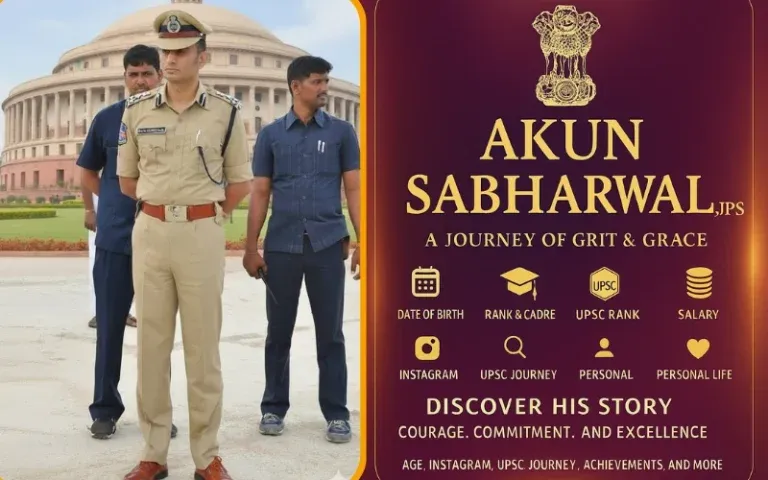
A Career With Purpose
The Indian Police Service stands among the most respected civil services in India. It offers an opportunity to protect communities, uphold the law, and contribute to the country’s internal security. Unlike many careers that focus on a single responsibility, an IPS officer performs administrative, investigative, and leadership duties throughout the service.
Thousands of graduates prepare every year with the dream of joining this prestigious profession. Many of them explore IPS Corner to understand how the selection process works, what skills are required, and how the career develops after appointment. Having complete knowledge from the beginning allows aspirants to prepare more effectively and avoid unnecessary mistakes.
Educational Requirements
The minimum qualification for appearing in the Civil Services Examination is a bachelor’s degree from a recognized university. Candidates from science, commerce, arts, engineering, medicine, agriculture, and other disciplines are eligible to apply.
Students in their final year of graduation can also appear for the examination according to UPSC regulations. Along with educational qualifications, applicants must satisfy the prescribed age limits, nationality conditions, and physical standards.
Medical fitness is particularly important because IPS officers regularly perform physically demanding assignments that require stamina and endurance.
Civil Services Examination
Selection for the Indian Police Service takes place through the Civil Services Examination conducted by UPSC. The process begins with the Preliminary Examination, which contains objective questions designed to shortlist candidates.
Successful candidates appear for the Main Examination. This stage consists of descriptive papers that evaluate writing ability, analytical thinking, general awareness, and subject knowledge.
Candidates clearing the mains are invited for the Personality Test. During this stage, the interview board evaluates confidence, leadership qualities, communication skills, ethical judgment, and overall suitability for public administration.
The final merit list determines service allocation based on rank, preference, and available vacancies.
Professional Training
After selection, candidates undergo extensive professional training before receiving independent responsibilities. Training combines classroom learning with practical field exercises.
The academic curriculum includes criminal law, police administration, forensic science, cybercrime investigation, ethics, disaster management, leadership, and public administration. Outdoor sessions focus on endurance training, swimming, horse riding, weapon handling, tactical exercises, and physical fitness.
This balanced training prepares officers to handle both administrative work and emergency situations with confidence.
Everyday Responsibilities
The responsibilities of an IPS officer depend on the assigned posting. Officers supervise police stations, monitor criminal investigations, maintain law and order, manage emergency operations, and coordinate with district administration.
Some officers serve in specialized branches including intelligence, cybercrime, anti-terror operations, economic offences, and traffic management. Others receive assignments in central organizations responsible for national security and border management.
Every responsibility demands professionalism, discipline, and fair decision-making.
Career Advancement
The Indian Police Service provides structured opportunities for career growth. Officers begin with probation and gradually receive greater administrative responsibilities through promotions.
The promotion hierarchy generally includes Superintendent of Police, Deputy Inspector General, Inspector General, Additional Director General, and Director General of Police.
Experienced officers may also serve in organizations involved in intelligence gathering, criminal investigation, disaster response, and national security administration.
Preparation Strategy
Preparing for UPSC requires consistent effort over a long period rather than short bursts of study. Candidates should begin by understanding the complete syllabus and examination pattern.
Reading newspapers daily improves awareness of governance, international affairs, economic developments, and current events. Standard books should be revised multiple times to strengthen concepts instead of frequently changing study resources.
Mock examinations improve confidence and time management, while regular answer-writing practice develops the ability to present ideas clearly during the Main Examination.
Many aspirants use IPS Corner resources to organize preparation schedules and stay informed about important updates.
Essential Professional Skills
Leadership remains one of the most valuable qualities required throughout an IPS career. Officers must communicate effectively with police personnel, government officials, and the general public.
Patience, integrity, emotional intelligence, honesty, and problem-solving ability are equally important because officers frequently face situations requiring calm judgment under pressure.
Strong physical fitness and continuous learning also contribute to long-term professional success.
Future Of The Service
Modern policing has expanded significantly with advancements in technology. Cyber security, digital investigations, forensic analysis, artificial intelligence, financial crime detection, and electronic surveillance now form important parts of law enforcement.
Officers who regularly update their professional knowledge are better prepared for specialized assignments and leadership positions in the future. As technology continues evolving, the responsibilities of IPS officers will also become more dynamic and diverse.
Conclusion
The Indian Police Service offers a rewarding career for individuals who are committed to discipline, leadership, and public welfare. officersdetails.com provides valuable information for readers interested in civil services, government careers, and competitive examination guidance. Consistent preparation, regular revision, physical fitness, and a positive attitude create a strong foundation for success in the UPSC examination. Stay dedicated to your goals, continue improving your knowledge, and work with confidence toward becoming an IPS officer who serves the nation with integrity.
Read also:-
navneet sikera current posting 2023
major rishabh singh sambyal wife